Which is Better Value? Msi Prestige 14 Flip Ai vs Wobkey Crush 80 Compared
When shopping for a new ultraportable laptop, buyers are often torn between premium-looking convertibles that promise flexibility and more conventional clamshells that maximize performance per dollar. This comparison examines two laptops that target different parts of that spectrum: the Msi Prestige 14 Flip Ai, a thin-and-light 2-in-1 aimed at creators and professionals who value versatility and design, and the Wobkey Crush 80, a contender marketed toward users who want strong everyday performance and a better price-to-performance ratio. This article breaks down real-world use cases, design and build, display, performance, battery life, ports and expandability, software and ecosystem, and—most importantly—value. The goal is to help readers decide which machine better matches their priorities.
Introduction
Both machines appear in the modern 14-inch laptop segment where portability, battery life, and enough horsepower for productivity coexist. The MSI model leans on convertible functionality and a refined aesthetic, while the Wobkey takes a more straightforward approach, trading some premium touches for potentially lower prices and higher core performance. Buyers typically care most about how a laptop fits into their daily workflows: can it handle editing and multitasking, how long will it run away from the charger, and does it feel good to use? This comparison focuses on how each device serves common buyer needs—students, creative professionals, frequent travelers, and anyone who wants a dependable everyday machine.
Design and Build
Msi Prestige 14 Flip Ai: The Prestige line has historically emphasized thin profiles, metal chassis, and a professional look. The "Flip" designation indicates a 360-degree hinge and touch-enabled display that supports active stylus input on many SKUs. In practice, that means the unit can be used as a laptop, tablet, or in tent mode for presentations and sketching. The design is typically lightweight for a 14-inch convertible, with tapered edges and a refined hinge mechanism. The trade-offs often include slightly higher cost and sometimes warmer chassis temperatures when packing higher-performance components into a thin convertible shell.
Wobkey Crush 80: The Crush 80 is presented as a solid-value clamshell or slightly flexible chassis (depending on SKU) that prioritizes thermal performance and port selection. Expect a more utilitarian design—durable materials but fewer frills like polished chamfers or hinge-driven tablet modes. The sturdier internal cooling and simpler hinge can mean quieter sustained performance and more consistent thermals under prolonged load.
Real-world impressions
- For frequent flyers who take notes or annotate PDFs on the go, the Prestige's 2-in-1 form factor is a practical advantage.
- For users who do long editing sessions or compile code, the Crush 80's thicker body and better cooling often translate to fewer thermal throttling pauses.
Display and Input
Display quality and input devices directly affect day-to-day satisfaction. Both models target 14-inch panels but with different emphasis.
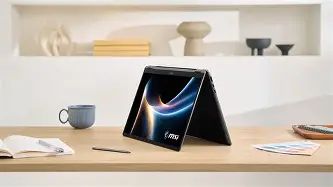
Msi Prestige 14 Flip Ai typically ships with higher-end options: a 14-inch 16:10 or 3:2-ish aspect ratio panel, higher color accuracy, and touch + stylus support. That makes it attractive to photo editors, designers, and anyone who benefits from accurate colors and extra vertical space. The keyboard layouts on Prestige models are usually compact but comfortable, with responsive keys and decent travel for a thin machine. The touchpad is often large and precise, tuned for Windows Precision drivers.
Wobkey Crush 80 often prioritizes high refresh or full-HD options focused on sharpness and battery efficiency. Color accuracy can be good for general content consumption and office work, but top-tier color-critical work may need external monitors or higher-tier panels. Input devices on the Crush 80 are generally practical: full-size keyboard with slightly deeper travel and tactile feedback, and a reliable touchpad—often with physical click mechanisms favored by some users.
Real-world use cases
- Creators and designers who need accurate color and stylus input will appreciate the Prestige display and pen support.
- Students and office professionals who prioritize typing comfort and long reading/writing sessions will find the Crush 80’s keyboard satisfying.
Performance and Thermals
Performance differences hinge on available processor and cooling configurations. Benchmarks vary by SKU, but the story in everyday use is consistent.
Msi Prestige 14 Flip Ai commonly offers efficient, modern processors that balance single-threaded responsiveness and good battery life—often Intel U-series or similar energy-efficient chips with integrated AI acceleration on newer models. The convertible’s thin build limits sustained thermal headroom, so while short bursts (app launches, light editing, browsing) feel snappy, longer heavy workloads (extended video exports or large-code builds) may see the CPU reduce clocking to keep temperatures in check.
Wobkey Crush 80 focuses on sustained performance—either through more aggressive cooling or by using slightly higher power limits on CPU options. That makes the Crush 80 better suited to continuous heavy tasks such as long video renders, multitasking with large datasets, or running virtual machines. If the Crush 80 offers AMD or higher-TDP Intel options, they typically outperform thin convertibles in sustained workloads.
Battery life
Battery life is highly dependent on configuration and usage. The Prestige, with its efficiency-minded processors and often higher-resolution display, can achieve excellent battery life in typical productivity tasks, especially with power-optimized settings. The Crush 80, if configured with higher-performance components and cooling, may sacrifice some run time but can deliver more consistent performance when plugged in.
Shop the latest Laptops & Computers picks on Amazon.
See Deals →Ports, Connectivity, and Expandability
Connectivity matters for real-world utility—presentations, external displays, storage, and accessories.
Msi Prestige 14 Flip Ai tends to include a modern mix: USB-C with Thunderbolt support on many SKUs, one or two USB-A ports, microSD or full-size SD on creative-focused SKUs, and a headphone jack. The presence of Thunderbolt makes it easy to connect fast external drives and docks, which extends its usefulness despite a compact port selection.
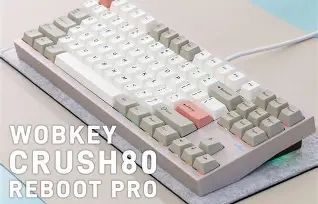
Wobkey Crush 80 often provides a wider set of ports, prioritizing full-size HDMI, multiple USB-A ports, and perhaps an Ethernet option via a dongle or dedicated jack for users who need wired networking. That makes the Crush 80 more plug-and-play in environments with diverse peripherals.
Software, Warranty and Support
MSI usually ships its laptops with a small set of bundled utilities—fan control profiles, display calibration tools, and warranty options that vary by region. Support tends to be manufacturer-driven with international service centers in many markets.
For Wobkey, buyer experience varies: smaller brands may provide an attractive warranty and direct support model but may lack the global service footprint of larger vendors. Buyers should verify warranty length, on-site options, and return policies from the seller before buying.
Price and Value
Price is the decisive factor for many buyers. The Prestige series typically commands a premium for its convertible design, metal chassis, and feature set (touch + stylus, high-quality display, Thunderbolt). The Crush 80 positions itself as a value-focused alternative—more performance per dollar in traditional laptop form, often with fewer premium finishes.
Value, however, depends on what a buyer needs. If the convertible functionality, color-accurate display, and lightweight metal design enable daily workflows (e.g., sketching, presentations, mobile photo editing), the higher cost of the Prestige can be justified. For buyers who primarily need raw performance, a comfortable keyboard, and broad connectivity at a lower price point, the Crush 80 often represents better value.
Comparison Table
| Category | Msi Prestige 14 Flip Ai | Wobkey Crush 80 |
|---|---|---|
| Form factor | 14-inch convertible (360° hinge), touch + stylus support | 14-inch clamshell (or limited-flex hinge), traditional laptop |
| Build materials | Aluminum or metal chassis, premium finish | Mixed metal/plastic, durable utilitarian design |
| Typical CPU options | Energy-efficient modern U-series CPUs (Intel/AI features) | Higher TDP mobile CPUs or performance-focused U/H options |
| Display | High color accuracy options, touch-enabled, higher aspect ratios | FHD or high refresh options, good brightness, fewer color-critical options |
| Ports | Thunderbolt/USB-C, limited USB-A, sometimes SD card | More USB-A, HDMI, possibly Ethernet/headphone—better out-of-box connectivity |
| Battery life | Strong in light tasks; excellent with efficiency settings | Good to very good but trade-off with sustained performance |
| Thermals & Sustained Performance | Limited by thin chassis; best for bursts and moderate workloads | Better sustained performance due to more cooling headroom |
| Target users | Creative professionals, presenters, mobile professionals | Students, office users, developers, budget-conscious power users |
| Value proposition | Premium flexibility and display quality at a higher price | Higher performance per dollar and broader connectivity |
Pros & Cons
Msi Prestige 14 Flip Ai
- Pros: Premium 2-in-1 versatility, touch and pen support, color-accurate display options, lightweight metal chassis, Thunderbolt support for fast accessories.
- Pros: Excellent for presentations, sketching, and color-sensitive work.
- Cons: Higher price compared with clamshell alternatives; limited sustained performance in thermally constrained workloads.
- Cons: Fewer full-size ports out of the box; repairs and upgrades may be limited due to compact construction.
Wobkey Crush 80
- Pros: Better value for raw sustained performance, more versatile port selection, comfortable keyboard and practical design.
- Pros: Easier to thermally manage heavy workloads and often cheaper to purchase for equivalent CPU/RAM combinations.
- Cons: Fewer premium touches—less emphasis on display color accuracy and no dedicated pen support on many SKUs.
- Cons: Build materials and finish may not feel as premium; brand support can vary depending on region and reseller.
Buying Guide: Which Should You Choose?
Deciding between these two laptops comes down to matching device strengths to the buyer’s primary use cases. Use the checklist below to guide the purchase.
1. Prioritize the primary task
- If sketching, on-screen annotation, or color-critical photo editing is frequent, prioritize the Prestige for its touch panel and color options.
- If compiling code, video encoding, running virtual machines, or heavy multitasking is common, the Crush 80’s sustained performance and cooling will likely serve better.
2. Portability vs thermals
- Travelers who need a light carry and flexible modes: Prestige.
- Users who need stable performance while plugged in and less worried about minimal weight savings: Crush 80.
3. Display and input
- Choose the Prestige for better displays and pen input. If those features are not used regularly, the Crush 80 will usually be more cost-effective.
- Test keyboard feel in store or videos—typing comfort is subjective but crucial for frequent writers.
4. Ports and connectivity
- If frequent HDMI, multiple USB-A peripherals, or wired networking are required without dongles, the Crush 80 is the pragmatic choice.
- If Thunderbolt and high-speed external docks are preferred (and dongles are acceptable), the Prestige keeps a clean profile with powerful expandability via one port.
5. Battery and real-world endurance
- Look for independent battery benchmarks for the exact SKU being considered. Manufacturer claims vary widely with display configuration and CPU choice.
- Consider whether quick charging or long battery life in light tasks is more valuable than peak performance when plugged in.
6. Warranty and support
- Confirm warranty length, on-site vs mail-in service, and optional extended coverage—especially for buyers who travel internationally.
- Smaller or newer brands may offer attractive introductory pricing but check return policies and support reviews.
7. Future-proofing and upgrades
- Check whether RAM is soldered or user-upgradeable, and whether storage can be expanded. Thin convertibles often lock RAM; clamshells sometimes allow upgrades.
- Consider the long-term needs: more RAM and fast NVMe storage extend a laptop’s usable life more than marginal improvements in CPU generation.
Practical Scenarios and Recommendations
Below are a few concrete buyer profiles with recommended picks and rationale.
Student who writes, streams, and takes notes
Recommendation: Wobkey Crush 80
Find top-rated Laptops & Computers products at great prices.
Browse Now →Rationale: Students benefit from a solid keyboard, broad port selection for dorm setups, and strong performance for multitasking and casual media editing. The Crush 80 typically covers these needs at a friendlier price.
Freelance photographer or digital artist on the move
Recommendation: Msi Prestige 14 Flip Ai
Rationale: Pen support, accurate color, and a convertible hinge make the Prestige a natural fit for quick edits, client presentations, and in-field review. The premium display and lighter weight are valuable when traveling light.
Developer or power user who compiles often
Recommendation: Wobkey Crush 80
Rationale: Sustained CPU performance and better cooling reduce compile times and thermal throttling. Extra ports and upgradeability make the Crush 80 practical for longer-term heavy use.
Business traveler who gives presentations and wants a premium feel
Recommendation: Msi Prestige 14 Flip Ai
Rationale: The refined chassis, convertible modes for on-the-go presentations, and Thunderbolt expandability align with professional travel needs.
Conclusion
Both the Msi Prestige 14 Flip Ai and the Wobkey Crush 80 have clear value propositions. The Prestige sells a premium package centered on versatility, display quality, and a refined design—features that matter most to creatives, presenters, and mobile professionals. The Crush 80, on the other hand, emphasizes cost-effective sustained performance, more connectivity, and practical ergonomics, which suit students, developers, and users who prioritize raw capability per dollar.
Ultimately, value depends on how a buyer uses the machine. If the convertible form factor, pen support, and color-accurate display will be used regularly, the higher upfront cost of the Prestige can deliver outsized value through improved productivity and a better user experience. If those features would sit idle, and sustained performance, ports, and upgradeability matter more, the Crush 80 typically represents the better financial decision. Prospective buyers should compare the exact SKUs and display options, test keyboards where possible, and weigh warranty/support terms before making a final choice—matching the laptop to daily workflows yields more value than choosing a brand or model on reputation alone.