The Ultimate Setup Guide for Your Cinema 1200
Introduction
The Cinema 1200 is positioned as a versatile home theater solution for people who want cinematic sound without the complexity of a full surround system. This guide walks through everything an owner needs to know to get the best performance from a Cinema 1200 — from unboxing and physical placement to connectivity, calibration, real-world use cases, and buying considerations. The tone is practical and editorial: it focuses on what buyers typically care about when choosing and setting up an all-in-one home theater product.
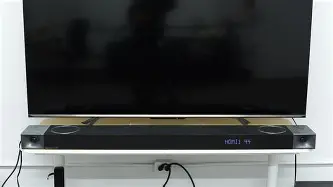
What the Cinema 1200 aims to deliver
The Cinema 1200 is designed to bridge the gap between compact soundbars and multi-component surround systems by offering an immersive soundstage, useful connectivity options, and simplified setup. Buyers usually care about five things: clarity for dialogue, convincing low-end for movie effects, spatial cues for Atmos or virtual surround, seamless TV integration (HDMI eARC/ARC), and minimal setup headaches. The rest of the article assumes the Cinema 1200 provides those core capabilities — if a specific variant has different features, the same setup principles apply.
Unboxing and initial checks
Before doing anything elaborate, take a few minutes to inspect the package contents and prepare the room.
- Check the box for the soundbar, subwoofer (if included), satellite speakers or surround modules, power cables, mounting hardware, HDMI cable (if supplied), quick-start guide, and remote control.
- Confirm firmware or model stickers for future reference when checking support pages or downloads.
- Keep the manual handy for model-specific pairing instructions and the warranty card.
Physical placement and room considerations
Placement is one of the biggest determinants of perceived performance. Even a high-end product can underperform in a poor location.
Placement checklist
- Soundbar position: Center the Cinema 1200 under the TV and keep it unobstructed. Avoid placing it inside closed cabinets.
- Subwoofer: For the deepest impact, place the subwoofer near the front wall but not pushed hard into a corner; corners boost bass but can cause boominess. A common approach is the "subwoofer crawl": place the sub at the listening position, play a bass-heavy track, then walk the room perimeter to find where the bass sounds best and place the sub there.
- Surround modules (if present): Put them at or slightly above ear height, angled towards the listening position. For small rooms, back-wall reflections can give a fuller sense of space; for larger rooms, try side-wall placement.
- Keep distance from hard reflective surfaces: Large glass tables, bare floors, and flat walls create harsh reflections. Rugs, curtains, and soft furniture help tame those reflections.
Mounting options
Many owners prefer wall-mounting the soundbar for a clean look or to match TV-mounted installations. If mounting, use the supplied bracket or purchase a compatible bracket rated for the Cinema 1200’s weight and dimensions. When placing the soundbar on furniture, ensure the top of the soundbar does not block the TV's sensors or IR path if the remote uses IR.
Connectivity: recommended wiring and network setup
Connecting the Cinema 1200 to the TV and other devices correctly ensures the best audio quality and the fewest headaches.
Primary connections
- HDMI eARC/ARC: This is the preferred connection. Connect the TV’s HDMI eARC/ARC port to the Cinema 1200’s HDMI eARC/ARC input. Enable HDMI CEC and eARC in the TV settings. eARC carries full-resolution multichannel audio (e.g., Atmos-enabled tracks) and typically supports better lip-sync handling.
- Optical/SPDIF: Use this only if the TV lacks eARC. Optical is limited to compressed surround formats and stereo in some scenarios, so it’s a fallback option.
- HDMI passthrough for consoles/streamers: If the Cinema 1200 supports HDMI inputs, run sources through the soundbar to the TV when convenient — but be mindful of HDMI version limits (4K@60Hz vs 4K@120Hz) which matter for high-frame-rate gaming.
Network and wireless
If the Cinema 1200 offers Wi‑Fi or Ethernet, connect it to the home network for firmware updates, streaming, and app-based room calibration. Bluetooth is useful for quick mobile streaming but is not a replacement for HDMI eARC for TV audio.
Initial power-up and firmware
Power up the system and look for a firmware update before final calibration. Manufacturers often refine processing and fixes via firmware. Use the app or the web interface to check for updates; a current firmware can improve codecs support, lip-sync, and bass management.
Discover deals on Electronics — updated daily.
Browse Now →Calibration and tuning
Calibration transforms the Cinema 1200 from “good” to “great” by adapting the system to the room.
Automatic room calibration
Many modern systems include built-in calibration: a microphone on the soundbar or mobile-app assisted measurement. Run the calibration routine from the listening position or the manufacturer app. Allow multiple sweeps if the software suggests them. Calibration typically sets speaker levels, delay times, and crossover points between the soundbar and subwoofer.
Manual adjustments
- Dialogue level: If dialogue sounds recessed during movies, raise the center/dialogue or “voice” level rather than global volume.
- Subwoofer level: Adjust subwoofer gain until low frequencies are present and tight — too much gain produces a boomy, indistinct sound.
- Crossover and phase: When available, set the crossover to around 80–120 Hz for small speakers and 60–80 Hz for larger mains. Flip the subwoofer phase if bass cancels at the listening position.
- Sound modes: Try movie, music, and night modes. Movie mode often emphasizes surround processing and low-end; music mode prioritizes natural tonality; night mode compresses dynamics to avoid disturbing others.
Real-world use cases and tips
Owners use the Cinema 1200 in different scenarios — each benefits from small tweaks.
Dedicated home theater
For a dedicated room, place the listening position on the room’s central axis and use acoustic absorption at first reflection points (side walls and ceiling) to tighten imaging. If possible, integrate the Cinema 1200 with a projector or large-screen TV using HDMI eARC for the best movie soundtracks.
Living room shared with daily TV
Most buyers use the soundbar for mixed content: news, streaming shows, sports, and occasional movies. Enable an automatic conversation enhancement or “clear voice” mode. Use multi-room or voice assistant features sparingly to avoid accidental changes during live sports.
Gaming
When gaming, ensure the TV and Cinema 1200 pass the required HDMI bandwidth for high-frame-rate signals. Switch to a game or low-latency mode to reduce input lag. If using virtual surround, check how directional effects (footsteps, gunfire) are rendered and adjust the processing intensity if necessary.
Music listening
While soundbars prioritize movie dynamics, the Cinema 1200 can perform well for casual music. Use stereo or music modes and disable heavy surround virtualization for a more natural presentation. Link via Wi‑Fi or a high-quality Bluetooth codec where supported (aptX, AAC) for better fidelity from phones.
Common troubleshooting
Even the best setups encounter issues. Here are common problems and quick fixes.
- No sound from TV: Confirm HDMI eARC is enabled on the TV, the Cinema 1200 is selected as the TV audio output, and the HDMI cable is connected to the correct ports.
- Lip sync issues: Use the soundbar’s delay/lip-sync adjustment or the TV’s audio delay setting. Firmware updates sometimes improve automatic sync.
- Subwoofer not pairing: Power-cycle both units, keep them within a few feet during pairing, and move other wireless devices away to reduce interference.
- Intermittent dropouts on wireless streams: Use 5 GHz Wi‑Fi where available, or switch to wired Ethernet for a reliable connection.
- Distorted volume at high levels: Reduce subwoofer gain or lower overall volume and enable dynamic range compression if the system offers it.
Pros & Cons
- Pros
- Compact footprint compared with separates, easy integration under a TV
- Typically strong dialogue clarity and improved cinematic bass vs TV speakers
- Simplified connection via HDMI eARC for multichannel audio
- Good feature set for mixed use—movies, streaming, gaming, and music
- Often includes app-based controls and room calibration
- Cons
- May not match the ultimate dynamics and scale of a true multi-channel separates system
- Subwoofer placement still requires experimentation to avoid boominess
- Some virtual surround modes can blur localization compared with discrete surround speakers
- Upgrade path is limited compared with A/V receivers and speaker swaps
Comparison: Cinema 1200 vs. alternatives
| System | Setup complexity | Footprint | Immersion | Flexibility / Upgrades | Best for |
|---|---|---|---|---|---|
| Cinema 1200 | Low — mostly plug-and-play | Small — single soundbar + sub | High for size — virtualized or object-based formats | Moderate — some models add wireless surrounds | Living rooms, renters, casual home theaters |
| Traditional 5.1 with AV receiver | High — speaker placement, calibration, wiring | Large — multiple speakers and receiver | Highest — discrete channels and scale | High — change receivers, swap speakers | Dedicated home theaters, audiophiles |
| Compact soundbar (no sub) | Very low | Very small | Moderate — less low-end and depth | Low | Small rooms, budget setups |
Buying guide: what to check before purchasing
When evaluating the Cinema 1200 or similar models, buyers should consider a short checklist to match the product to their needs.
Shop the latest Electronics picks on Amazon.
Browse Now →Room size and intended use
Match the product to the room. Larger rooms need stronger low-end and wider dispersion. For mixed-use living rooms, prioritize clear dialogue and easy integration. For dedicated rooms, prioritize immersive formats and calibration options.
Connectivity
Look for HDMI eARC to preserve the highest-quality multichannel audio. Ensure there are enough HDMI inputs for consoles and set-top boxes, or confirm that the TV supports passthrough with an HDMI switch. Network features like Wi‑Fi, Ethernet, and support for streaming services are additional conveniences.
Upgrade path and expandability
Some soundbars allow adding wireless rear speakers or an extra subwoofer later. If future upgrades matter, confirm whether the Cinema 1200 supports optional modules or multi-room ecosystems.
Codec and format support
Check whether the system supports Dolby Atmos, DTS:X (if relevant), and other object-based formats if immersive content is a priority. Even when using virtual formats, proper eARC support gives the best chance to decode native Atmos from streaming devices and discs.
Warranty, support, and software updates
Products that receive frequent firmware updates tend to improve over time. Verify the warranty length, the manufacturer’s support reputation, and whether the company has an active online support presence.
Listening tests
If possible, audition the Cinema 1200 with familiar material: a dialogue-heavy drama, an effects-rich action scene, and a music track. Bring headphones or use a show-demo to compare other options. Hearing how vocals and bass translate in the dealer’s room offers practical insight.
Accessories and useful extras
- High-quality HDMI cable rated for the required bandwidth (e.g., HDMI 2.1 for 4K@120Hz gaming).
- Wall-mount kit or low-profile TV stand that accommodates the soundbar height.
- Power surge protector to protect components during storms.
- Small room treatments: rugs, curtains, and first-reflection absorbers for improved sound quality.
Conclusion
The Cinema 1200 presents an excellent middle ground for people who want a cinematic experience without the wiring and space demands of a large separates system. Thoughtful placement, the correct HDMI eARC connection, and a careful calibration sequence unlock most of the product’s potential. Real-world buyers typically value clear dialogue, controlled bass, compatibility with TVs and consoles, and a straightforward upgrade path. By focusing on room acoustics, firmware updates, and the right connectivity choices, the Cinema 1200 can deliver substantial improvements over built-in TV speakers and provide a satisfying, long-term home theater solution.