Difference Between Asus Tuf Gaming A16 2025 and Cherry Xtrfy Mx 8 3 Tkl Wireless Explained
The title sets up an unusual but practical comparison: the Asus TUF Gaming A16 2025 is a full-featured gaming laptop, while the Cherry Xtrfy MX 8 3 TKL Wireless is a tenkeyless mechanical keyboard. One is a complete system for gaming, content creation and day-to-day computing; the other is a focused input device that upgrades typing and competitive play. This article explains the differences in purpose, design, performance expectations, and the real-world use cases that determine which product a buyer should prioritize.
Introduction
Consumers shopping for a complete gaming setup often encounter both system-level choices (which laptop or desktop) and peripheral decisions (which keyboard, mouse, headset). Comparing a laptop and a keyboard directly is not an apples-to-apples spec battle—it's about roles. The Asus TUF Gaming A16 2025 represents mobility, compute power and a full hardware stack, while the Cherry Xtrfy MX 8 3 TKL Wireless represents the tactile interface through which players and professionals interact with their machines. Understanding their differences helps buyers decide whether to allocate budget to a higher-tier system, invest in a premium input device, or balance both.
Detailed Product Analysis
Asus TUF Gaming A16 2025 — what it brings to the table
The Asus TUF Gaming A16 line is positioned as a value-focused but rugged gaming laptop series. The 2025 refresh continues the TUF approach: practical performance, durable build, and gamer-friendly features without the premium price tag of flagship lines. Key themes to evaluate are performance, thermals, display, build and expandability.
Performance: The TUF A16 typically ships with mid- to high-tier mobile processors and discrete GPUs that are aimed at 1080p to 1440p gaming. For buyers that play modern AAA titles, perform video editing, or stream, the laptop’s CPU/GPU balance matters more than raw single-component numbers. The TUF series generally prioritizes sustained performance through beefy cooling solutions, meaning it can maintain higher clocks under load than thin-and-light laptops.
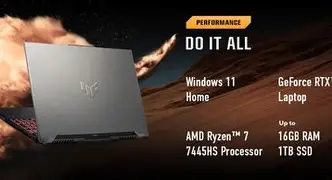
Display and ergonomics: A 16-inch panel provides a comfortable workspace for gaming and productivity. High refresh rates (commonly 120Hz or above on gaming models) deliver smoother motion for competitive play, while larger screens are helpful for creative work. Expect a keyboard with RGB accents and a reasonable layout, but not the same key feel or customization depth as a dedicated mechanical keyboard.
Build, thermals and portability: TUF models emphasize durability—reinforced chassis, MIL-STD components in some regional SKUs—and a thermal design that trades some weight for better cooling. This makes the laptop less pocketable than ultrabooks but more reliable for long sessions. Battery life on gaming laptops is often compromise: useable for light work but short under sustained gaming.
Expandability: The TUF A16 typically supports RAM and storage upgrades, giving longevity to the platform. For users who upgrade over time, this is a significant advantage compared to sealed ultraportables or many small-form-factor devices.
Cherry Xtrfy MX 8 3 TKL Wireless — what it brings to the table
The Cherry Xtrfy MX 8 3 TKL Wireless occupies a different space entirely: it's a peripheral focused on delivering a premium typing and gaming experience in a compact, wireless tenkeyless layout. Its name suggests Cherry MX-style switches or partnership with Cherry switch technology, and Xtrfy’s design approach typically emphasizes performance for competitive players and ergonomic simplicity.
Looking for the best Laptops & Computers deals on Amazon?
See Deals →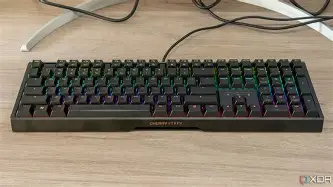
Switches and typing feel: Mechanical switches are the core value proposition. Buyers care about actuation force, travel, and feedback. A keyboard in this class usually offers options or defaults to tactile or linear Cherry MX switches, known for consistent performance and long lifespan. The TKL layout removes the numeric keypad to save desk space, which benefits players who need mouse space for large-swipe movements.
Connectivity and latency: Wireless mechanical keyboards aimed at gamers usually provide multiple connectivity modes—Bluetooth for multi-device convenience and a 2.4 GHz dongle for low-latency gaming. The MX 8 3 TKL Wireless is likely to prioritize a responsive 2.4 GHz mode with full n-key rollover over USB to meet competitive demands while offering Bluetooth for office or mobile use.
Battery life and build: Wireless keyboards balance battery life and feature set. Backlighting, polling rates and extra macro layers affect battery performance. Many users prioritize a keyboard that lasts weeks between charges under normal use, while competitive gamers may switch to wired or 2.4 GHz mode during intense sessions. Construction quality—plastic or aluminum top plate, detachable cable, and keycap material—affects durability and user satisfaction.
Pros & Cons
Asus TUF Gaming A16 2025
- Pros: All-in-one system: CPU, GPU, display, storage and battery included; upgradeable RAM/storage in most SKUs; robust cooling for sustained performance; 16-inch screen balances productivity and immersion; generally good value for performance.
- Cons: Heavier and bulkier than ultraportables; battery life limited during gaming; built-in keyboard and trackpad will not match the feel or responsiveness of a premium mechanical keyboard; internal components eventually become dated.
Cherry Xtrfy MX 8 3 TKL Wireless
- Pros: Compact tenkeyless layout saves desk space and improves mouse movement area; mechanical switches provide superior tactile/linear feedback and durability; wireless modes deliver convenience with low-latency options for gaming; typically superior keycaps and firmware customization compared to laptop keyboards.
- Cons: Single-device peripheral—not a complete system; requires a host (laptop/desktop/tablet) to be useful; can add cost on top of an already expensive gaming laptop; wireless mode may introduce some complexity (battery management, pairing).
Side-by-side comparison
| Aspect | Asus TUF Gaming A16 2025 (Laptop) | Cherry Xtrfy MX 8 3 TKL Wireless (Keyboard) |
|---|---|---|
| Product category | Portable gaming laptop / workstation | Peripheral: mechanical tenkeyless wireless keyboard |
| Primary purpose | Run games, edit video, general computing, streaming | Input device for typing and competitive gaming |
| Portability | Portable but heavier (laptop bag required) | Very portable; small footprint and easy to take to LANs |
| Performance | Depends on CPU/GPU configuration; system-level compute | Typing/gaming responsiveness; depends on switch type and connection |
| Battery | Batteries power full system; limited under gaming | Keyboard battery lasts multiple days to weeks depending on lighting use |
| Customization | Limited to software profiles, lighting and upgradable parts | High customization: key remaps, macros, switch choices (depending on model) |
| Who benefits most | Users who need a complete, mobile gaming or creative workstation | Users who want a superior typing/gaming interface for any system |
| Price role | Major purchase that dominates budget | Peripheral purchase that complements the system |
Real-world use cases and buyer priorities
Understanding how each product fits into real-life scenarios clarifies which buyers should prioritize which device.
Casual and serious gamers
A serious gamer who travels to LAN events or streams frequently may prioritize both: a capable laptop for portability and a high-quality TKL keyboard for competitive play. However, if the budget forces a choice, the laptop will enable playing anywhere, while a peripheral improves feel and performance but requires a host. Competitive esports players often prioritize low-latency mechanical keyboards because input precision can affect outcomes in fast-paced games.
Content creators and streamers
Content creators usually place more value on CPU/GPU capability, screen size/color accuracy and storage. The TUF A16’s screen and compute power directly affect video encoding times and the editing experience. A mechanical keyboard can speed up editing workflows and provide better ergonomics, but it is secondary to the core system performance.
Students and hybrid workers
Students who need a single device for homework, light gaming and media consumption will find the laptop more transformative. If desk space is a concern, a TKL keyboard adds comfort for typing and is easy to carry to study sessions. Battery life and portability matter most for this group.
Looking for the best Laptops & Computers deals on Amazon?
View Offers →Office and productivity users
For office-heavy work, a premium mechanical keyboard improves long-term comfort and typing accuracy. Paired with any modern laptop—consumer or professional—the keyboard is a high-impact upgrade for daily use. However, choosing a high-performance laptop isn’t necessary unless running CPU-heavy tasks.
Buying guide: which one should we pick and when?
Buying decisions depend on budget, priorities and use cases. The following checklist helps readers decide.
When to prioritize the Asus TUF Gaming A16 2025
- Need an all-in-one, portable gaming/creative machine: A laptop is a full system and will handle everything from gaming to video editing without requiring extra components.
- Mobility matters: If the user travels, attends classes, works in multiple locations or wants a machine for couch gaming, a laptop is essential.
- Value per dollar: For those who want good performance without the premium cost of ultra-high-end models, the TUF line usually offers solid value.
- Upgradeability: Users who plan to extend the machine’s life through RAM and storage upgrades should consider laptops with accessible internals.
When to prioritize the Cherry Xtrfy MX 8 3 TKL Wireless
- Already have a capable system: If a desktop or laptop is already sufficient, upgrading the keyboard yields immediate improvement in daily comfort and competitive play.
- Desk space and esports play: TKL keyboards free up mouse space, an important advantage for low-DPI gamers who rely on wide mouse swipes.
- Typing quality and longevity: Mechanical switches and better keycaps can dramatically improve the typing experience and endure far longer than laptop keyboards.
- Multi-device usage: If a user switches between devices (laptop, tablet, phone), a wireless keyboard with Bluetooth switching is highly convenient.
Practical budget guidance
For limited budgets, prioritize the component that unlocks the most value for intended tasks. Gamers without a capable system should put the bulk of their budget into a capable laptop or desktop. Users who already have an adequate computer and spend hours typing or want a competitive edge should invest in a high-quality mechanical keyboard.
Compatibility and ergonomics checklist
- Confirm OS compatibility for keyboard software and macros.
- Check available ports and dongle support—some laptops use limited USB-C ports and may need adapters when using a 2.4 GHz dongle.
- Assess desk layout: is a TKL layout acceptable, or is a numpad required?
- For travel, ensure keyboard battery life and laptop battery life meet expected usage patterns.
Practical tips for pairing the two
They are complementary. A powerful laptop with a compact, reliable keyboard creates a balanced, portable setup for gamers and creators alike.
Recommendations for pairing:
- Use the laptop’s USB-C charging and connectivity for docked desktop-like sessions, and pair the wireless keyboard for convenience in a home setup.
- When gaming on battery, switch the keyboard to a low-power or wired mode to reduce the chance of latency or disconnects during critical moments.
- Customize keyboard lighting and macros to match laptop profiles so the user has consistent settings whether docked or mobile.
Conclusion
The Asus TUF Gaming A16 2025 and the Cherry Xtrfy MX 8 3 TKL Wireless serve different but complementary roles. The laptop is the platform: it determines what games can be played, how quickly content renders, and where computing tasks can be performed. The keyboard is the interface: it changes how the user interacts with that platform, improving comfort, precision and customization. Buyers should prioritize the device that unlocks the largest improvement in their daily workflow or entertainment: if mobility and raw performance are essential, invest in the laptop; if the current system is already sufficient and input quality or competitive edge matters, a premium mechanical TKL keyboard is a high-value upgrade. For many enthusiasts the best outcome is to balance the two—choose a solid, well-cooled laptop and complement it with a mechanical keyboard that fits the user’s playstyle and desk setup.